
Key Takeaways
- An eye exam can help detect signs of glaucoma, age-related macular degeneration, cataracts, and diabetic eye disease.
- Your eyes can also reveal changes associated with health conditions such as diabetes and high blood pressure.
- Many eye conditions have no early symptoms, so regular exams are an important part of protecting your eye health.
- Children, adults, and adults 65+ may have different eye exam needs.
You might leave a routine eye exam thinking it was only about glasses. However, your optometrist looks at much more than your prescription, including your overall eye health and signs of changes you may not have noticed yet. Cochrane Eyecare provides thorough, personalized eye exams designed to help protect your vision and long-term eye health.
A comprehensive eye exam can help detect signs of eye diseases such as glaucoma, age-related macular degeneration (AMD), cataracts, and diabetic retinopathy. Your eyes may also reveal changes associated with certain conditions that affect your overall health. If you’re due for a visit, you can learn more about the comprehensive eye exams available at Cochrane Eyecare.
What Eye Diseases Can an Eye Exam Help Detect?
Glaucoma and Macular Degeneration
Both glaucoma and AMD can progress without noticeable symptoms, particularly in their early stages. Your vision can seem normal while changes are already developing.
A comprehensive eye exam allows your optometrist to look for early signs of these conditions, which can support earlier diagnosis, treatment, and management.
Cataracts and Diabetic Eye Changes
A cataract develops when the normally clear lens of your eye becomes cloudy, which can gradually affect your vision. Diabetic eye changes can affect the blood vessels in your retina. A comprehensive eye exam allows your optometrist to examine the retina for signs of conditions such as diabetic retinopathy.
Can Your Eyes Show Signs of Other Health Conditions?
Yes. An eye exam gives your optometrist a unique view of the blood vessels and other structures inside your eyes. Changes in these structures may sometimes provide clues about your overall health.
For example:
- Diabetes can cause changes to the blood vessels in the retina.
- High blood pressure can also affect the blood vessels in the eyes.
Finding these changes doesn’t necessarily mean you have an underlying health condition. Your optometrist may recommend additional testing or follow-up with another healthcare provider when appropriate.
What Are the Signs You Shouldn’t Ignore?
Changes in Your Vision
Contact your optometrist if you notice changes such as:
- Blurry vision or new blind spots
- Sudden loss of vision in one or both eyes
- A sudden increase in floaters
- Flashes of light or sudden changes in your field of vision
Sudden vision loss or other significant changes in your vision require prompt medical attention.
Changes in Eye Comfort or Appearance
Your eyes can also let you know when something isn’t quite right through changes in how they feel or look. Pay attention to symptoms such as:
- Persistent eye pain or redness
- Ongoing dryness or irritation
- Swelling around the eye
- Unusual discharge
If any of these persist or worsen, or if new symptoms appear, contact your optometrist.
What Happens During an Eye Exam?
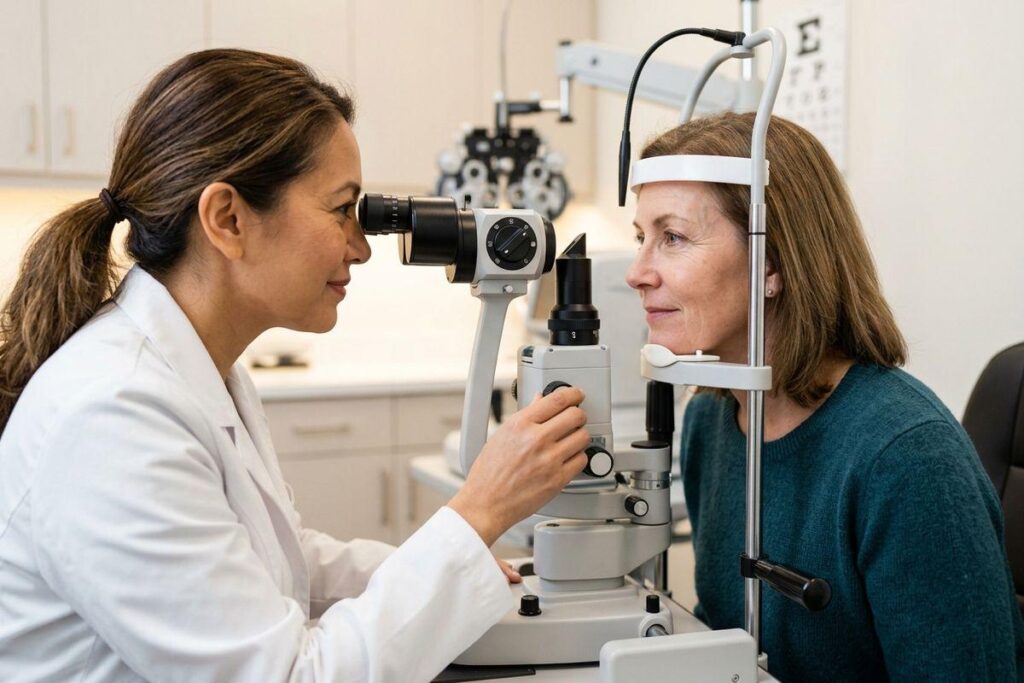
Your visit starts with a conversation. Your optometrist will review your overall health, medications, and any concerns you have about your eyes or vision.
From there, a comprehensive eye exam may include:
- A visual acuity assessment to check how clearly you see at different distances
- A refraction to determine your prescription
- An assessment of how your eyes work together, including depth perception, peripheral vision, colour vision, and eye muscle function
- An evaluation of your overall eye health, including your retina and optic nerve
- Eye pressure testing to look for signs associated with glaucoma
Depending on your needs, your optometrist may also recommend pupil dilation to get a clearer view of the retina and optic nerve.
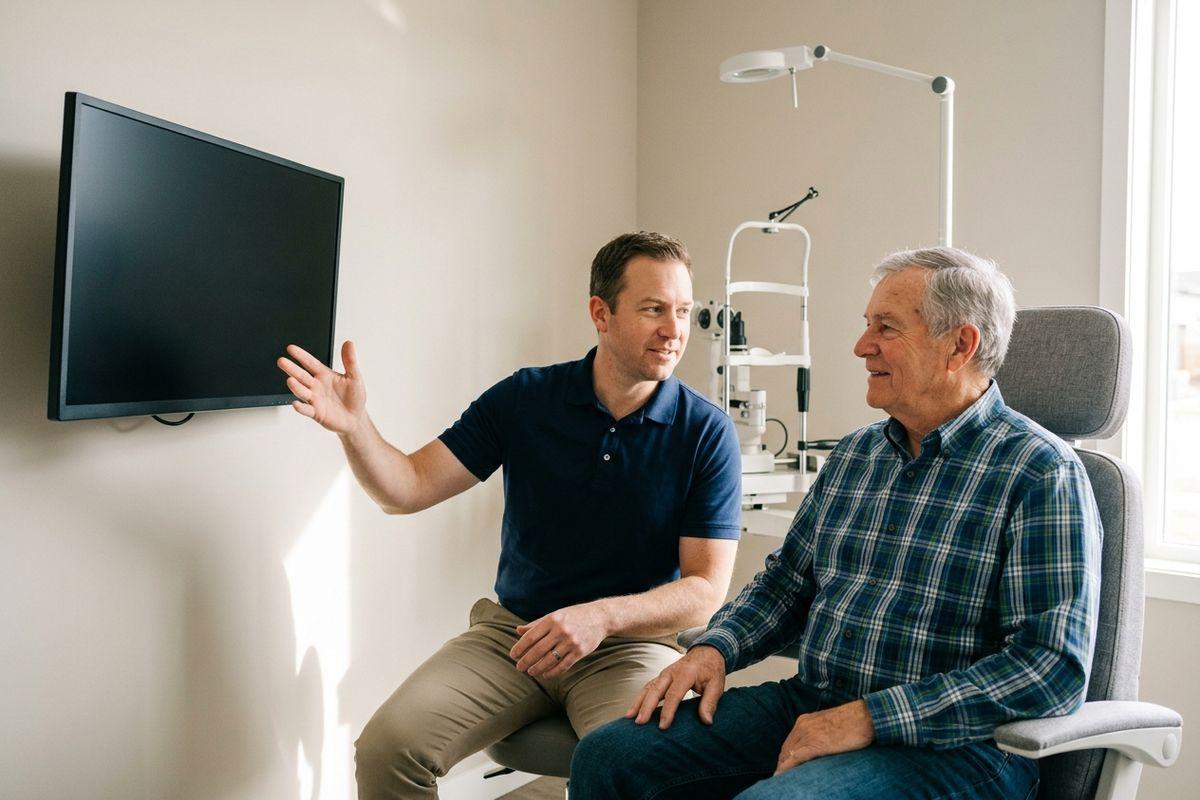
After your exam, your optometrist will review the results with you, answer your questions, and discuss any recommended next steps.
How Often Should You Book an Eye Exam in Cochrane?
Kids, Adults, and Adults 65+
Children’s eyes are still growing, so regular exams can help monitor their vision and eye health as they develop.
Adults also benefit from routine comprehensive eye exams, even when their vision seems clear. How often you should visit can depend on your age, eye health, medical history, and individual risk factors.
Adults 65 and older are generally recommended to have annual eye exams to monitor age-related changes and eye health.
Why Early Detection Helps
Many eye diseases can develop without obvious symptoms. Regular comprehensive eye exams give your optometrist an opportunity to identify changes early, monitor your eye health, and recommend treatment or follow-up when needed.
Cochrane Eyecare provides personalized, modern, and compassionate eye care for patients and families in Cochrane. Book your eye exam today to take a proactive approach to protecting your vision and long-term eye health.