
Key Takeaways
- Annual eye exams are recommended for most people, with babies seen between 6–9 months, at least one exam between ages 2–5, and yearly visits once school begins. More frequent visits are needed for those with conditions like dry eye, diabetes, high blood pressure, or a family history of eye disease.
- Many eye conditions develop without noticeable symptoms, making regular exams important at every age.
- Certain health conditions and family history can mean more frequent visits are needed.
- Some symptoms, like sudden vision changes or eye pain, need prompt attention before your next scheduled exam.
- Simple daily habits can support your eye health between visits.
Why Regular Eye Exams Matter More Than You Think
You might feel like your vision is perfectly fine, and yet something could still be quietly changing in your eyes. Conditions like glaucoma and early macular degeneration often develop with no pain, no blurry vision, and no obvious warning signs at all. By the time you notice something feels off, the condition may have already progressed.
Most people benefit from an annual eye exam. Your exact schedule depends on your age, health history, and whether you wear glasses or contact lenses, but yearly visits are the best way to catch changes early and stay ahead of issues.
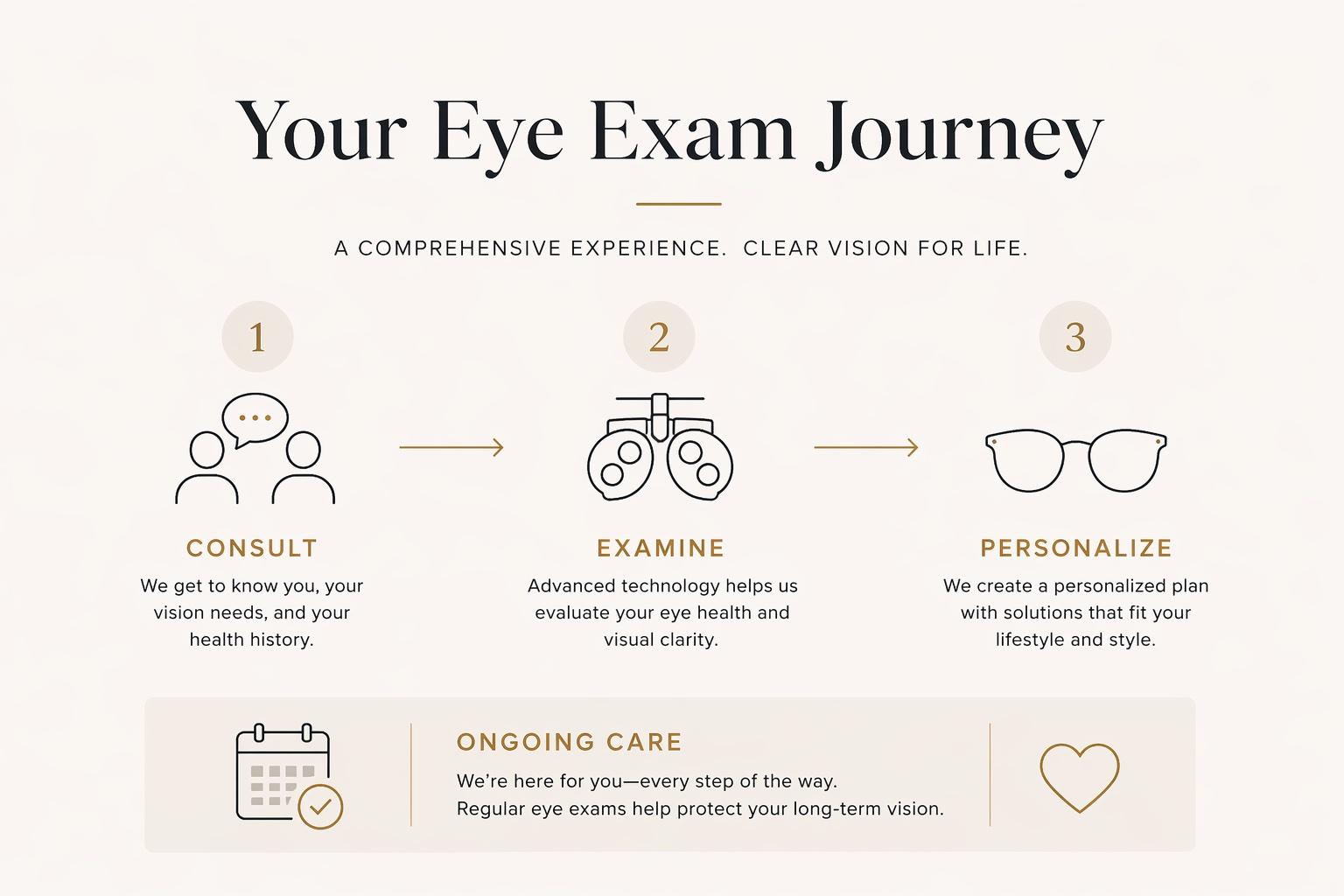
Beyond checking your prescription, a thorough comprehensive eye exam at Cochrane Eyecare can also pick up on signs of high blood pressure, diabetes, and other health concerns, sometimes before any other symptoms appear.
Eye Exam Frequency by Age
Infants & Babies
A child’s first eye exam should happen between six and nine months of age. Even though your baby can’t read an eye chart, an optometrist can still check for early vision problems using specialized tools like a retinoscope, which measures how light reflects off the retina to assess focus without the baby needing to say a word.
Catching issues like lazy eye or misaligned eyes early gives children a good chance at healthy, balanced vision as they grow. Parents often don’t realize vision problems are present because young children adapt and rarely complain. You can learn more about what to expect at children’s eye exams and the vision milestones to watch for at each stage.
Toddlers & Preschoolers
Between the ages of two and five, your child should have at least one eye exam. This is a period of rapid visual development, and early detection of issues like refractive errors, eye alignment problems, or focusing concerns can make a meaningful difference before school begins.
A separate exam is also recommended when your child starts kindergarten to make sure their vision is ready for the demands of the classroom.
School-Age Kids & Teens
From age six through nineteen, annual eye exams are recommended. A child’s eyes change quickly during these years, and a prescription that fit in September might not be enough by the following spring. Uncorrected vision problems can make reading, learning, and sports harder than they need to be.
Adults & Seniors
For most adults, annual eye exams are the best way to stay on top of eye health. Even if your vision feels stable, subtle changes can develop year over year that are easier to address when caught early. From age forty onward, regular exams become especially important, as this is when presbyopia (difficulty reading up close) often begins and the risk of eye disease increases.
Adults sixty-five and older particularly benefit from annual exams to monitor age-related changes more closely, such as cataracts, glaucoma, macular degeneration, and shifts in your glasses prescription as your eyes continue to change.
When You May Need More Frequent Exams
Some people need to visit more often than the standard schedule suggests. If you have diabetes or high blood pressure, the blood vessels in your eyes can be affected, and regular monitoring helps catch changes early. Learning about diabetic eye exams can help you understand what to watch for and why annual visits are especially important when managing diabetes. A family history of glaucoma or macular degeneration also raises your personal risk, which makes more frequent check-ins a practical choice.
If you currently wear glasses or contact lenses, annual visits help keep your prescription accurate. Wearing an outdated prescription can contribute to headaches, eye strain, and fatigue, especially during long days at work or school. Our team also offers eye disease diagnosis and management for patients who need ongoing monitoring of conditions that can change over time.
Signs You Shouldn’t Wait for Your Next Exam
Certain symptoms are worth calling the clinic about right away, rather than waiting for your next scheduled appointment. These include:
- Sudden changes in vision
- Floaters or flashes of light that appear out of nowhere
- Eye pain or redness that doesn’t go away
- Ongoing discomfort, dryness, or irritation
- Difficulty seeing clearly at night or up close
These symptoms don’t always point to something serious, but they’re worth checking promptly. Our optometry clinic’s emergency eye care page outlines what conditions need same-day attention and what to do while you wait to be seen. Getting a clear answer sooner is always a more comfortable position to be in.
Simple Habits to Support Your Eye Health Between Exams
Screen Time & Eye Strain
If you spend long hours in front of a screen, the 20-20-20 rule is a helpful habit to build into your day. Every twenty minutes, look at something twenty feet away for twenty seconds. It gives your eye muscles a brief reset and can reduce the tired, strained feeling that builds up over a full workday. You can read more about how the 20-20-20 rule works and why it helps your eyes recover during screen-heavy days.
Everyday Eye Care Tips
A few small choices can make a meaningful difference in your long-term eye health. Good habits to keep in mind include:
- Wearing UV-protective sunglasses whenever you’re outdoors
- Eating a balanced diet that includes leafy greens and fish
- Using protective eyewear during sports or physical work
These aren’t complicated changes, but over years and decades, they add up. Protecting your eyes from UV exposure and physical injury, along with fuelling your body with nutrients that support eye health, can help preserve your vision well into the future. Exploring the range of UV-protective sunglasses available for adults and children is a good place to start.
Schedule Your Next Exam at Cochrane Eyecare
Keeping up with regular eye exams is one of the straightforward ways to stay on top of your overall health. Our friendly team at Cochrane Eyecare provides thorough, personalized exams for patients of all ages, from your little one’s first visit to annual check-ins for the whole family.
Contact us today or book your appointment online and keep your vision in good shape for years to come.