
Key Takeaways
- Cataracts develop slowly, often over many years, so early changes can be easy to miss.
- Common early signs include blurry or foggy vision, faded colours, glare sensitivity, and trouble seeing at night.
- Risk increases after age 40, especially with diabetes, smoking, UV exposure, or with family history.
- Routine eye exams can catch cataracts early, giving you more options before surgery becomes necessary.
- UV-protective sunglasses and healthy habits can help slow progression.
Your vision changes so gradually that it can be hard to notice something is wrong. You might think the room is just dimly lit, or that your glasses prescription is simply overdue for an update. But sometimes, that slow creep of blurriness or that bothersome glare from oncoming headlights is your eyes telling you something specific.
Cataracts are one of the most common reasons vision gradually dims or blurs, and they often begin showing subtle signs long before they become a major problem. Knowing what to look for can help you catch changes early and keep your options open.
Cochrane Eyecare offers comprehensive eye exams that can detect these kinds of changes early, before they become harder to manage.
What a Cataract Does to Your Vision
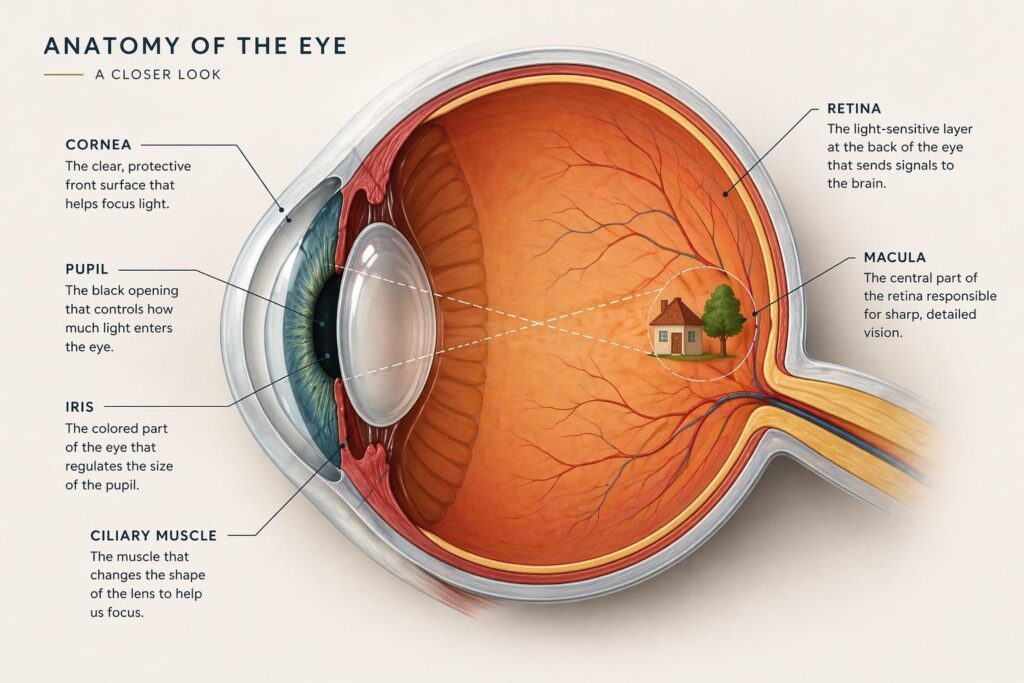
The lens inside your eye is normally clear, much like a clean window. A cataract forms when proteins in the lens begin to break down and clump together, creating a cloudy patch. Over time, that cloudiness spreads, and looking through your own lens starts to feel like looking through a foggy window on a cold morning.
The process is slow. In the early stages, the clouding may only affect a small area of the lens, so you might not notice much at all. That’s part of what makes cataracts worth paying attention to, because by the time vision feels significantly affected, they’ve often been developing for years.
Early Signs & Symptoms to Watch For
Changes in Everyday Vision
One of the first things people notice is a soft, persistent blurriness that doesn’t go away when you blink or clean your glasses. Colours may start to look a little washed out or take on a yellowish tint, like an old photograph. Some people also notice double vision in one eye, which can feel disorienting during reading or screen time.
These changes tend to creep in slowly, which is why many people attribute them to aging or a shift in their prescription. If your vision feels consistently foggy or dim without a clear explanation, it’s worth getting checked out. Our team at Cochrane Eyecare can identify these early shifts through eye disease diagnosis and management as part of your regular eye exam, giving you a clearer picture of what’s happening inside your eyes.
Light & Night Vision Problems
Cataracts scatter incoming light in ways that a healthy lens wouldn’t, and that shows up in a few distinct ways. You might notice halos or starburst patterns around streetlights or headlights at night. Sunlight or indoor lighting might feel unusually harsh or glaring.
Driving after dark can become genuinely uncomfortable or difficult. If you find yourself avoiding nighttime driving or squinting more than usual in bright settings, those are signs worth discussing with an eye care provider.
Who Is at Risk & When Cataracts Tend to Start
Age & When Symptoms Appear
The protein breakdown that leads to cataracts typically begins around age 40, though most people don’t notice meaningful symptoms until after age 60. That long gap between the biological start and noticeable vision changes is exactly why regular eye exams matter so much during middle age and beyond.
It doesn’t mean you’ll develop cataracts or that symptoms will arrive on a set schedule. Everyone’s eyes age differently, and some people experience changes earlier or later than others.

Factors That Raise Your Risk
Certain factors can make cataracts more likely to develop or progress faster. These include:
- Diabetes or other metabolic conditions
- Smoking
- Prolonged exposure to UV light without eye protection
- Long-term use of corticosteroid medications
- A family history of cataracts
- A previous eye injury
If any of these apply to you, it’s a good reason to be proactive about routine eye exams, even if your vision feels fine right now. People living with diabetes, in particular, face a higher risk of multiple eye conditions, and diabetic eye exams can help monitor those changes more closely.
Can an Eye Exam Catch Cataracts Early?
A routine eye exam is how cataracts are detected. The doctor uses advanced imaging and specialized lights to examine the lens directly, which allows them to spot clouding long before it significantly affects your day-to-day vision. These exams can also detect over 270 other health conditions, making them valuable far beyond just checking for cataracts.
Catching cataracts early opens up more options. In mild cases, an updated glasses or contact lens prescription can help manage symptoms comfortably for quite some time. Early detection also means you and the doctor can monitor progression over time and plan ahead, rather than reacting to a sudden drop in vision.
How to Slow Cataract Progression
Lifestyle Habits That Help
While cataracts can’t be reversed without surgery, certain habits may help slow how quickly they develop. Wearing UV-protective sunglasses outdoors is one of the most straightforward steps you can take, especially during bright Alberta summers and at Cochrane’s higher elevation, where UV intensity is stronger year-round. UV exposure over many years contributes to lens damage, so protecting your eyes consistently adds up. Cochrane Eyecare carries a range of prescription and non-prescription sunglasses with proper UVA and UVB protection to keep your eyes shielded year-round.
Quitting smoking can also lower your risk of developing serious eye conditions, including cataracts. A diet rich in antioxidants, think dark leafy greens, berries, and colourful vegetables, can help support overall eye health as well. Small, consistent habits tend to matter more than any single big change.
When to Book an Eye Exam
You don’t need to wait for obvious vision loss to schedule an appointment. If you notice any of these, it’s a good time to book:
- Any new blurriness, dimness, or fogginess in your vision
- Increased sensitivity to glare or light
- Difficulty seeing clearly at night
- Frequent changes in your glasses or contact lens prescription
Even small, subtle shifts in your vision are worth a conversation. Catching changes early gives you and the care team more room to work with.
At Cochrane Eyecare, the team takes the time to thoroughly examine your eyes and walk you through exactly what they find, in plain language that makes sense. If you’ve noticed any changes in your vision or it’s simply been a while since your last exam, book an appointment today and get a clear picture of where your eye health stands.