

Key Takeaways
- Sleeping in contacts reduces oxygen flow to your cornea, even during a short nap.
- Dry lenses that stick to your eyes can scratch the corneal surface when removed.
- Regular overnight wear raises your risk of infection and corneal damage.
- If you fall asleep in your contacts, use rewetting drops before removal and rest your eyes afterward.
- Routine eye exams help catch contact-related changes early.
Remove Your Contacts Before You Sleep
You’re exhausted after a long day and fall asleep on the couch without remembering to take your contacts off. How much risk are you exposing your eyes to?
Unless your optometrist has specifically prescribed lenses for overnight wear, you should remove your contacts before sleeping. Even with approved extended-wear lenses, sleeping in contacts can increase the risk of infection and should only be done under your eye doctor’s guidance.
Sleeping in contact lenses, even occasionally, can reduce the oxygen flow your cornea needs and create conditions where harmful bacteria can grow.
At Cochrane Eyecare, we offer comprehensive eye exams to help catch changes to your vision before they develop into a bigger problem. Here’s what you should know and what you should do if you fall asleep in your contacts.
Why You Shouldn’t Sleep with Your Contacts In
Your Cornea Needs Oxygen
Your cornea, the clear front surface of your eye, doesn’t have blood vessels. Instead, it gets most of its oxygen directly from the air around you. When you close your eyes to sleep, your cornea’s oxygen supply drops. A contact lens sitting on your eye adds a second barrier, making it even harder for your cornea to breathe during the night.
Dryness & Discomfort
While you sleep, your eyes don’t produce the same amount of moisture as they do when you’re awake and blinking. Your contact lenses absorb what little moisture is available and begin to dry out. By morning, your lenses might feel like they’re stuck to your eye.
Risks of Sleeping in Contacts Regularly
Infection Risk
Your eyes have natural defences against bacteria, but they rely on oxygen and proper tear flow to work. When a contact lens obstructs oxygen and tear flow, your eye’s defences weaken. This gives bacteria time to multiply without being washed away.
One of the more serious infections linked to contact lens misuse is microbial keratitis, an infection of the cornea that can develop quickly and become painful. It can start with mild symptoms but may progress quickly if it is not addressed.
Corneal Damage
One night of sleeping in contacts may not cause lasting harm, but doing it regularly adds up. Repeated overnight wear can stress the cornea and create conditions where infection or inflammation is more likely. In some cases, this can lead to corneal ulcers, which are open sores on the surface of the eye that can threaten vision.
Signs Your Eyes Need Attention
After sleeping in your contacts, pay attention to how your eyes feel. Some discomfort is normal, but certain signs mean it’s time to have your eyes checked:
- Redness or irritation that won’t settle after a few hours
- Blurry vision or increased sensitivity to light
- Discharge, eye pain, or a gritty feeling that lingers
These symptoms can point to something more than general dryness. Don’t wait to see if they clear up on their own. If symptoms feel urgent, contact our office right away. Our emergency eye care page explains when same-day attention may be needed and what steps to take next.
What About a Short Nap?
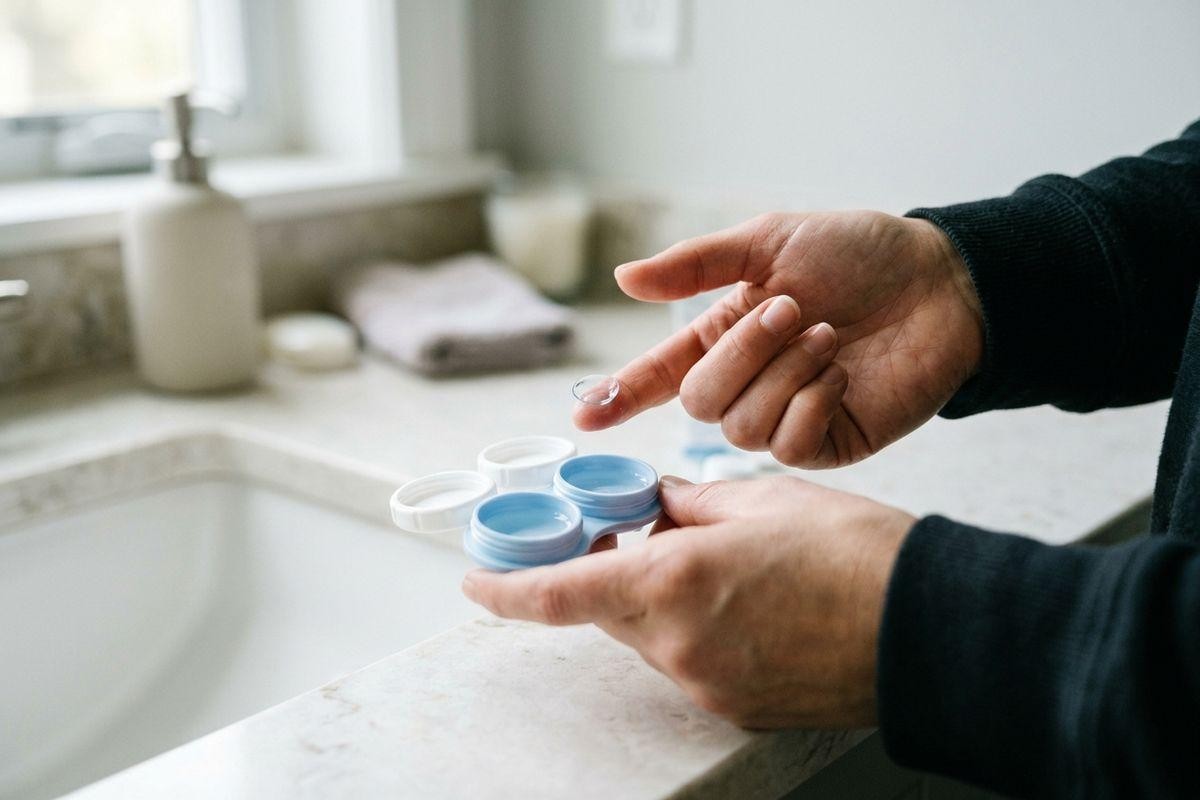
Even a short nap in your contacts can increase risk because your eyes still receive less oxygen and your lenses can dry out. The safest habit is to take your contacts out before any sleep, naps included.
Keeping a lens case and a travel-size bottle of solution beside your bed makes it easier to build good habits.
Contact Lens Habits That Protect Your Eye Health
Daily Wear Tips
The schedule your eye doctor sets for your lenses isn’t arbitrary. It’s based on the material of your lens, your eye health, and how long that specific lens is designed to be worn safely. Sticking to that schedule is one of the most straightforward things you can do to protect your eyes.
Store your lenses in fresh solution every time, and never use water as a substitute. Water, including tap and bottled, can harbour microorganisms that can cause eye infections.
Regular Eye Exams Matter
A lot can change in your eyes from one year to the next, especially when you wear contacts regularly. Routine eye exams give your eye doctor a chance to confirm that your prescription is still accurate and that your lenses still fit the way they should. A lens that fits poorly can cause issues even when you’re wearing it correctly. Staying on top of your regular appointments is a simple way to protect your vision for the long term.
If you have questions about your contact lens habits or want to schedule an eye exam, our team at Cochrane Eyecare is here to help. Book your appointment today and get the personalized guidance your eyes deserve.